English (United Kingdom)
Latest update


Media Release

Sri Lanka dispatches flood relief to Pakistan


As soon as news was received last week of the serious floods in Pakistan , President Mahinda Rajapaksa  telephoned Pakistani Prime Minister Syed Yusuf Raza Gilani and assured Sri Lanka?s strong solidarity with the efforts of the Government and People of Pakistan to cope with the challenge of the serious natural disaster.


The President thereafter directed that a consignment of relief assistance be sent to Pakistan immediately. Accordingly, the Ministries of Defence, of Cooperatives and Internal Trade and of External Affairs worked in liaison to send a consignment of dry rations by Sri Lanka Air Force aircraft C-130. This consignment of approximately 18 tons consisting of red lentils, chick peas, chili powder, curry power, white sugar, samba rice and tea reached Islamabad on 8th August 2010. 


The items were immediately handed over that same day by the High Commissioner of Sri Lanka Air Chief Marshal Jayalath Weerakkody, to the Prime Minister?s Office. On receiving the items, Mr. Naimat-Ullah, the Coordinator for Flood Relief Operations, appreciated the gesture extended by a close friend ? Sri Lanka, at this hour of need. Mr. Naimat-Ullah also commented that Sri Lanka has been a very special country for Pakistan and that both countries have come forward to each other?s help in times of need. 


Ministry of External Affairs

Colombo


9th August 2010 


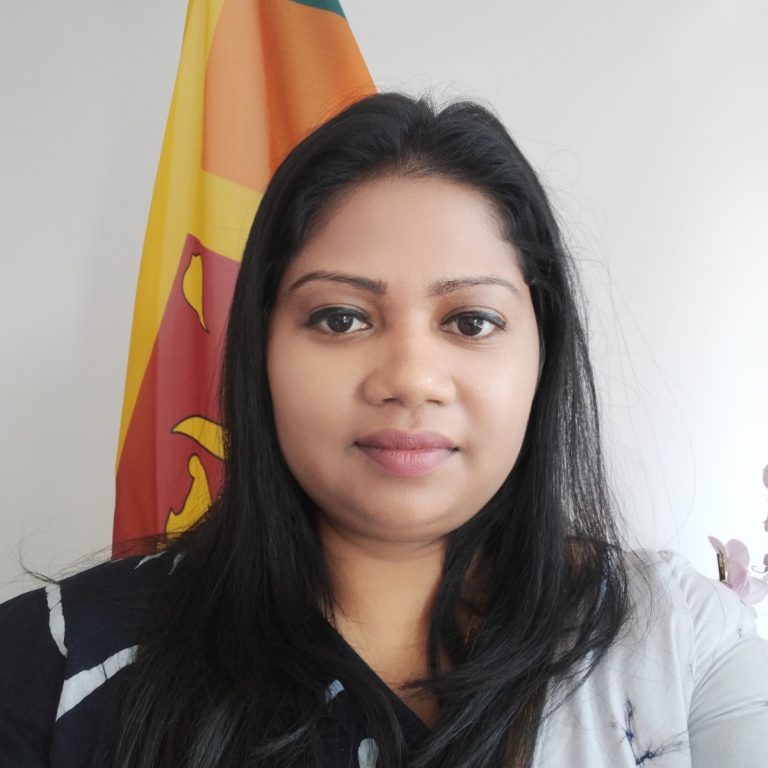
Sri Lanka's Ambassador to Poland, who is also accredited to Bulgaria and Romania, H. E. the Ambassador Pamela J. Deen presented Credentials to H. E. Traian Basescu, the President of Romania on 21st July 2010.


Image


                                                                                    20th Sri Lanka
                                                                   International
                                                           Gem & Jewellery Show

                                       2nd to 5th September  2010


                    Sirimavo Bandaranaike Memorial Exhibition Centre


  Sri Lanka, the world's oldest source of the most spectacular gemstones will showcase the beauty and rarity of her magnificent sapphires and dozens of other varieties of gemstones at Facets Sri Lanka, the International Gem and Jewellery Show in September 2010.

Held annually in Colombo since 1991, Facets Sri Lanka made an exciting new beginning in September 2005 when the show moved to a smart new venue, the BMICH Exhibition and Convention Centre in Colombo. Exhibitors increased by more than 50 percent and the show took on a whole new professional and international atmosphere, with smart new booths displaying a greater variety of fine gemstones and exquisite jewellery.

Facets Sri Lanka 2010 promises to be even bigger and better. Number of exhibitors are expected to grow by a further 30 percent and the Fair will showcase a wide variety of sapphires and gemstones from producers and wholesalers from all the main producing areas of Sri Lanka.

To give the show an international flavour, producers and wholesalers from the main gemstone producing countries in Africa, Asia, South America and Australia are being invited to exhibit their gemstone products at the show.

Contact details:Sri Lanka Gem & Jewellery Association38,Frankfurt Place , Colombo 04,Sri Lanka  

Tel       :  + 94 11 2597226/2597470/2554144         Fax      :  + 94 11 2597250

Email   : This e-mail address is being protected from spambots, you need JavaScript enabled to view it Web    : www.facetssrilanka.com/www.slgia.org


 Sri Lanka deplores attacks on Gaza bound boats

The reports of attacks during the Israeli military operation on boats carrying supplies for Palestinian people in international waters off the coast of Gaza have caused grave distress to the Government and the people of Sri Lanka.

Sri Lanka deeply regrets the loss of life and injuries resulting from this operation. Indiscriminate use of force to prevent the carriage of supplies for people under occupation is condemned.

The Government and the people of Sri Lanka extend their sympathies to the families of the victims and injured.  Sri Lanka calls for expeditious action to relieve the sufferings of those who are affexcted by the attacks.

Sri Lanka reiterates its conviction that sustainable peace and security in the region is achievable only through peaceful dialogue.

Ministry of External Affairs                                                                                                                                                       Colombo                                                                                                                                                                                    2nd June 2010


The Minister of External Affairs Hon. Professor G.L. Peiris visits New York

PDF Print E-mail
 Image
The Hon. Professor G.L. Peiris, Minister of External Affairs, visited New York on 23 and 24th May, 2010. During his visit he met with Secretary-General Ban Ki-moon and a range of senior UN officials, including Chef de Cabinet, Vijay Nambiar and Under Secretary General Lynn Pascoe. He was also interviewed by Reuters, the BBC, the Wall Street Journal and the Press Trust of India.
During his discussions with the senior officials he addressed the issue of the appointment of the Commission of Inquiry by the Government of Sri Lanka, to address, among other things, the accountability aspect. The Minister emphasized that the Commission has been given wide powers, is constituted of extremely eminent Commissioners and has been provided adequate resources to perform its task. In the circumstances, there was no reason to cast doubt on the ability of the Commission to discharge its mandate adequately to the satisfaction of all concerned or prejudge its possible outcomes. He also emphasized that it was important to allow space for the Commission to perform its functions without being pressured unnecessarily by external elements. He noted that other governments, including the US had welcomed the appointment of the Commission as similar mechanisms had been found useful in other post conflict situations. He further noted that the ground situation has changed substantially in the last few weeks making any outside intervention utterly or the appointment of an extraneous panel unnecessary.

Sri Lanka has a rich judicial history going back centuries and it could be expected that the Commissioners would conduct their investigations in conformity with the highest judicial standards. The proposal to conduct international investigations or even to appoint panels would duplicate the work of the Commission and would give rise to a negative political reaction within Sri Lanka.

The Minister also explained measures to be taken to realize the reconciliation goals of the Government following the successful defeat of a terrorist group that was considered to be invincible. Elections have been held in all the Provinces except in the North and for the national Parliament. The government was actively reaching out to the minorities. A substantial proportion of almost 300,000 persons who had been displaced is now substantially back in their own homes, over 8000 adult combatants will be treated as victims, rehabilitated and returned to their homes, child combatants are essentially being returned to their own families, extensive development work has been carried out in the North and the East to ensure that the people of these areas who were treated as a human shield by the LTTE and herded into a small combat zone by the terrorists will be able to resume their normal lives and become economically active again.

The Minister will proceed to Washington for additional meetings with the US authorities, including with Secretary of State Hillary Clinton.

The Minister was accompanied at these meeting by Ambassador Dr. Palitha Kohona, Deputy Permanent Representative Mr. Bandula Jayasekera and Counsellor Mr. Maxwell Keegel.


Permanent Mission of Sri Lanka
New York

25th May 2010


President Rajapaksa`s speech at the G 15 Summit in Tehran on 17th May 2010

I greatly value this opportunity to participate in the 14th Summit of the G-15 in Tehran, I wish to sincerely thank Your Excellency and the people of Iran for the warm welcome and geneourous hospitality extended to me and my delegation. I also would like to express my appreciation for the excellent Summit arrangemnts.

i congratulate Your Excellency, on your effective stewardship of the G-15 in the last four years, a period that has been characterized by global economic uncertainity induced by a financial crisis resulting from mismanaged globalization. Despite these odds, under able leadership, the projects component of the G-15 has been revitalized and several initiatives focusing on further advancing South-South cooperation have been launched.

Excellencies,

I consider it a special privilege and an honour for Sri Lanka to assume the Chair of the G-15 at the milestone of its 20th Anniversary.

The twenty years, since the inception of our Group, have seen significant changes in its collective economic profile. Some of our members, who have progressed to development indicators earlier limited to the ranks of the G8 countries, are already playing an influential role in the global economic power structure. The Group, has countries who are leading producers of oil and natural gas, of extractive resources and of commodities. Others have economies with large and diversified industrial bases accompanied by advanced technological capabilities. Common to our nations is a fast growing reservoir of human capital, contributing to the knowledge economy.

The G-15, continue to translate the economic progress for a greater voice in the global arena. In claiming such a voice, we can point to the strength of our collective developmental experiences. My country, Sri Lanka, has displayed capacity for growth despite many obsstacles. We have achieved an economic growth of about 6 percent per annum, with consequently our per capita income increasing from US dollars one thousand sixty (1,060) in the year 2005, to US dollars two thousand fifty (2,050) in 2009. What is significant is that it took us over 55 years since we gained independence to reach the one thousand dollar mark in our per capita income, but during the last 4 years that it has doubled. All of this was achieved despite an almost thrity year struggle against brutal terrorism and separatism, the devastation of the 2004 Asian Tsunami and the recent global financial crisis which reminds us of the systemic risks and vulnerability of the global financial system.

Excellencies,

The crux of the development approach of my country, as presented in the Mahinda Chintana, my electoral manifesto, is a people focused approach. We are committed to this approach and have set ourselves the multiple goals of rapid economic growth and employment generation, reduction of poverty accompained by re-distributive justice, regionally balanced development and environment sustainability. All of this, we seek to accompalish while remaining true to our longstanding framework of democratic govermnance and cultural values.

As I stated to my colleagues, the other Heads of State or Government of the South Asian nations during the 16th SAARC Summit in Bhutan, we in Sri Lanka, have the coniction that economic progress does not require the mass movement of populations from the rural hinterland to urban areas. Rather than moving people to urban areas, which brings about a variety of problems connected with housing, water, sewage and many social issues, my Government has consistently preferred to make facilities and resources available to the rural population in their own areas to ensure thay they have equal access to become partners as well as beneficiaries of modern development. This was a factor behind the recent resounding mandate my Government received from the rural population in all areas of Sri Lanka.

Excellencies,

It is pertinent to note in this regard that the Central Bank of Sri Lanka itself has been re-oriented to facilitate poverty reduction and micro-financing and development finance projects in the country, departing from their conventional approach to central banking. Equally, our state banks have taken the lead to open rural areas by providing greater access to finance and promote private banks to follow such a parth of development through competition in the banking and finance industry. Through such a spread, we have achieved a rate of 82 percent of households accessing the services offered by financial institutions.

I made a revolutionary change in the conventional poverty reduction strategy as well, by empowering the community to participate in their development through the popularly known Gama Neguma or the village re-awakening programme. This initiative was enriched with the development of rural access roads, electricity, drinking and irrigation water and other basic facilities connecting people. Therefore, my vision was to make the whole country one unique township and place the whole country on a path to become an emergin economy in Asia, with per capita income rising in excess if US dollars four thousand the next 5 years. Given that background, we would be happy to share our experience in re-shaping development strategies to meet our own needs,

Excellencies,

We all agree that our own development policies as well as those of the international and regional bodies that we represent must be people centered and result in a fair distribution benefits. The G15 with its unique composition, also representing about 33 percent of the word population, and clearly identified objectives, has the potential to play a constructive role in promoting people centered development initiatives in global economic and social policty dialogues.

It is for this reason that we stress the need for reforms to the international financial architecture, to better enable it to monitor, respond and prevent financial and economic disasters. To attain this objective, there must be an open, inclusive and transparent dialogue.

Furthermore, the Bretton Woods Institution when working with the developing countries, should take into account the latter's specific conditions and needs, as well as the structural constraints they confront. These Institutions should refrain from imposing conditionalities which we see in retrosopect, did lead in their own way to fueling the recent crisis. Though many of the developing economies have raised concerns in the past over so called Washington consensus and stressed the need for alternative development models and thinking for our progress, developing countries as a group has not succedded in the past. However, now we see a paradigm shift towards strategic state interventions, increased role for the government, safeguards to liberlization, deregulation etc, following the recent experience in the Western economies.

In addition we are concerned that despite the presence of the global economy and financial survelliance through multilateral organizations and existence of early warning systems, adequate progress has not been made in crisis prevention efforts.

Excellencies,

The developing world has not run away from its responsibility to contribute to the progressive liberlization of global trade. It is therefore all the more regrettable that we are yet awaiting the conclusion of the Doha Round of negotiations in the WTO and the delivery of its development madate. The G-15 must remain firm that the final package should address the concerns of the developing countries. There must be increased market access for the goods and services of export interest to us. They should not tie up with politically motivated conditionalties. We must also be clear that the provision of the policy space needed to develop our economies and to contribute to self sufficiency in agriculture would be an essential pre-requisite for a balanced outcome to the Round.

Excellencies,

Out 21st Century challenge of climate change is an issue towards which we in developing world owe limited, if not little historical responsibility. It must be recognized that the present trend would lead to the reduction of the environmental and carbon emission space available for developing countries in such a manner, as to impact on our entitlement to development. In this situation, it is the principles of equity and of common but differentiated responsibilites as enshrined in the UN Framework Convention on Climate Change that provide the direction for our future guidance.

Given the fast growing reservoir of human capital in our nations, we in the G-15 must remain sand protection of intellectual property, the developed nations must also provide the flexibility necessary for the sharing of knowledge and information, which would lead to a better world for us all. For us in Sri Lanka, being blessed by nature as we are with a rich bio-diversity, measures to prevent the misappropriation of genetic resources are especially paramount. We also urge a greater focus on the protection and preservation of tradional knowledge, including other aspects of our heritage such as folk-lore.

Excellencies,

The G-15, with the rich diversity of experience and civilizations inherent in its ranks, is uniquely placed to advocate the need for constructive balance in global policies. I am confident that the G-15 as it embarks on its third decade, would not be found wanting in meeting its responsibilities to its Member States and to the rest of the International Community.

In this context, I propose that G 15 work very closely with G 8 to promote constructibe global dialogue on all major aspects of development. A clear methodology needs to be worked out for this dialogue between the G 15 and G 8 to be realistic and fruitful.

The G 15, to harness its full potential within the group for prmoting people centered development, it is important that we launch a collective project for fair assessment of progress and prospects for enhanced co-operation in economic, financial and other areas including scientific and cultural aspects and appoint a high level task force using the great repository of expertise that we have our government institutions, academia and the private sector.

I propse that we concentrate on action to strengthen Development Corporation in the area of infrastructure development, human resource development and trade and investment promotion within the group. We together also should dimonstrate to the world our clear commitment to promote prosperity and preserve sustainable peace and security within and across all nations, and further develop our capacities for strong co-existence. In addition to the proposed Task Force, a mechanism to facilitate exchange of human resource skills within the group should be launched.

Excellencies, Ladies and Gentelemen,

I thank the Member States of the G15 for the confidence and faith placed on Sri Lanka to lead the group in the next term. I am confident that we have with us the capacity to ensure the resurgence of our countries and to revitalize our organization to be a more powerful player in promoting economic and social progress for the benefit of all.

I thank you for kind attention.

May the Blessings of the Noble Triple Gem be with you.


Minister of External Affairs, Prof. G. L. Peiris invites academics and intellectuals to contribute towards enhancing the Government's Foreign Policy objectives

Image

The inclusion of the Sri Lanka Bureau of Foreign Employment (SLBFE) and Sri Lanka Foreign Employment Agency (SLFEA) into the responsibilities of the Ministry of External Affairs has opened a vista of opportunities to utilize the reservoir of skills which are available in Sri Lanka, stated the Minister of External Affairs, Prof. G. L. Peiris. The Minister also stated that the remittance by expatriate workers to the country's economy was only second to the revenue brought in by the apparel sector and pointed out that with the SLBFE and the SLFEA coming within the purview of the External Affairs Ministry, more opportunities for Sri Lankan nationals to work abroad would be further explored.

The Minister made these observation on 11th May 2010 when he addressed academics, intellectuals and former senior officials of the Ministry as part of his efforts to establish a think tank at the Ministry of External Affairs.

Prof. Peiris, during his inaugural address to the members of the staff of the Ministry of External Affairs on 3rd May 2010 when he assumed duties at the Ministry, announced his intention to establish a think tank on foreign policy issues.

He also stated that the contributions by a think tank towards achieving the Government's long term foreign policy objectives would be of significant value to the Ministry. He further stated that a think tank could prepare position papers on various issues analyzing different aspects including the advantages and risks. He observed that such analysis would assist policy makers to study the situation and make decisions appropriately. Minister Prof. Peiris stated that though it was with this aim and objective that the Lakshman Kadirgamar Institute for International Relations and Strategic Studies (LKIIRS) was established, its importance would now increase after it was placed under the purview of the Presidential Secretariat.

The Minister also stated that the External Affairs Ministry would establish links with Universities, academics and intellectuals in their areas of expertise and identify disciplines which are relevant to the Ministry. He stated that the work connected to a think tank would be a consistent one and the process would continue.

The Minister, during his address, stated that Sri Lanka would take over the Chair of the G-15 when the Summit is held in Iran this year. He said that when President Mahinda Rajapaksa takes over the chairmanship of this regional grouping, Sri Lanka would be able to explore opportunities prevailing in the region, work towards maximizing benefits to all the members and address the aspirations of the developing world.

Secretary to the President, Mr. Lalith Weeratunga addressing the gathering, recalled the key role played by the Ministry of External Affairs when the Government was mounting its humanitarian operations. He stated that the support extended by the Ministry to the efforts of President Rajapaksa during a crucial stage in the country's post independence history, in addressing criticism and concerns from various quarters in the international arena, was significant.

Mr. Weeratunga stated that if he were to recognize an institution from the whole of Government, he would single out the Ministry of External Affairs as an entity which has a long history and institutional memory and noted the contributions made by many individuals in making this memory. He recalled the role played by the Ministry of External Affairs in strengthening ties with India during visits of a special delegation consisting of Mr. Basil Rajapaksa MP, Defence Secretary Gotabaya Rajapaksa and himself to India, and stated that the Ministry and the Sri Lanka High Commission in New Delhi were in the forefront of the discussions with the Government of India. The Secretary to the President commented that the initiative by Prof. Peiris in establishing a think tank was laudable and offered to provide necessary assistance from the Presidential Secretariat to this effort.

During his address, Mr. Weeratunga, also drew attention to the need to provide the youth of the country with adequate vocational training which can be marketed to the outside world in order to enhance their employment opportunities abroad. He also stated that the staff attached to Sri Lanka Missions abroad should additionally focus on marketing the skills of these youth in order to improve their opportunities for gainful employment overseas.

Deputy Minister of External Affairs, Geethanjana Gunawardena, senior officials of the Ministry, former Foreign Secretaries and senior officials who had served at the Ministry, were also present on the occasion.

Ministry of External Affairs
Colombo

12th May 2010

President to initiate study on post-conflict Lessons Learnt and Reconcilation

President Mahinda Rajapaksa will shortly appoint a Commission to report on the Lessons Learnt and Reconciliation with regard to the difficulties and troubled times that Sri Lanka had to undergo due to the terrorist inspired, manoeuvred and created conflict situation in recent years.

The President is of the view that the situation today provided an opportune moment to reflect on the recent conflict phase and the sufferings the country has gone through, in keeping with the common aspirations of all people in their resolve to have an assured era of peace, harmony and prosperity.

This inquiry stems from the President's overriding interest in the need for restorative justice by the Sri Lankan people. Its findings will seek to take the Sri Lankan nation towards the common goals of a multi-ethnic polity, in a spirit of cooperation, partnership and friendship, learning the lessons from recent history to ensure that there will be no recurrence of such tragic conflict in the future.

In assessing the Lessons Learnt from the rrecent conflict phase there will be the search for any violations of internationally accepted norms of conduct in such conflict situations, and the circumstances that may have led to such actions, and identify any persons or groups responsible for such acts.

It is also expected that recommendations would be sought on the nature of compensation to be granted to the victims or their dependents who have suffered in this c0nflict situation, as well as the institutional, administrative and welfare measures already taken in the post-conflict phase, and should be further taken in order to effect reconstruction, rehabilitation and reconciliation.

The legislative and administrative measures that may be necessary in order to prevent such situations in the future, and to promoted national unity and reconciliation among all communities will also be part of the mandate given by the President.

The Commission on Lessons Learnt and Reconciliation will comprise seven eminent Sri Lankans from here and abroad and its Terms of Reference are to be Gazetted in the next few days.

New Minister of External Affairs, Prof. G. L. Peiris assumes duties

The new Minister of External Affairs, Prof. Gamini Lakshman Peiris assumed duties at the Ministry of External Affairs on 3rd May 2010 (today) amidst the chanting of pirith followed by a brief sermon and blessings by the religious dignitaries present on the occasion.
Thereafter, addressing the staff of the Ministry, the new External Affairs Minister stated that he has assumed duties as the Minister of External Affairs at a time when terrorism has been successfully defeated and the focus is on social and economic development. He stated that the approach of President Mahinda Rajapaksa to Sri Lanka's Foreign Policy as underlined in the Mahinda Chinthanaya was to ensure that it was homegrown, indigenous and reflects Sri Lanka's history, culture, social and economic values which are considered sacrosanct, and our own relations with countries. He also pointed out that while it may not be possible to be in agreement with the international community at all times, Sri Lanka would convey its stance in the spirit of camaraderie, listen and respect the views of others. He also said that Sri Lanka would continue engaging with other countries and that it would be on the basis of partnership and participation. The External Affairs Minister also stated that one of the main objectives of the country's foreign policy would be to focus on the unique opportunities available in Sri Lanka and encourage countries to explore them and be partners in Sri Lanka's progress.

Address the gathering further, Prof Peiris pointed out that that the Government would focus on the areas of resettlement of the displaced persons, the restoration of their livelihoods and reintegration in the democratic process. At a time the country is coming out of a harsh and unpleasant period of its history, the Government would focus on national reconciliation so that the country can learn lessons from the past and move forward.

The Minister also announced that in commemoration of the World Press Freedom Day on 3rd May, President Rajapaksa had decided to pardon journalist J. S. Tissanayagam.

Minister Peiris also stated that efforts were underway to scale down the emergency regulations and that there will be a debate in Parliament to that effect. He pointed out that these were measures which would show to the world that the country was fast retuning to normalcy.

Discussing his plans for the Ministry of External Affairs, Prof. Peiris stated that he planned to establish a ?think tank? for ?brain storming sessions? on foreign policy issues. He added that he intended to work closely with Consuls in Sri Lanka and the business community in order to meet emerging challenges.

Deputy Minister of External Affairs, Gitanjana Gunawardena, welcoming the new Minister, recalled the valiant efforts and sacrifices made by the soldiers to free the country from terrorism and stated that the President had received a strong mandate from the people at the recent General Elections for his efforts. He also recalled Sri Lanka's long history since colonization and the establishment of the country?s foreign policy many decades ago. He added that he was looking forward to working with Minister Peiris, the staff at the Ministry and in Missions abroad.

Secretary to the Ministry of External Affairs, Mr. Romesh Jayasinghe also addressed the gathering.

The ceremony was attended by Parliamentarians, Mrs. Savithri Peiris, former Secretaries and Additional Secretaries to the Ministry, dignitaries and the staff of the Ministry of External Affairs.

Ministry of External Affairs
Colombo

3rd May 2010


Build new structures to achieve full potential of SAARC - President

Image


Let us within our own grouping be bold enough to introspect. We must take measures to improve the existing mechanisms through review, rationalisation and reinvigoration. If there is a need, we should not hesitate to build new structures and mechanisms, to enable SAARC to reach its full potential, said President Mahinda Rajapaksa in his address to 16th SAARC Summit at Thimphu, Bhutan today.

Having a common South Asian voice in issues of Climate Change, with those who historically contributed to climate change now sharing the burden of mitigating it; continued cooperation in the battle against terrorism; taking economic progress beyond statistics to reach the village level where most South Asians live, carrying out policies that strengthen the rural sector and prevent the unwelcome movement from village to city; and, the search for South Asia?s own home grown solutions to current and future problems were among the highlights of the President?s address.

President Rajapaksa said:

The South Asian voice on this issue guided by the principle of common but differentiated responsibilities must be strongly heard in all international fora. Those in the developed world who have historically contributed to the climate change must now bear the lion share of the burden to mitigate this phenomenon.

In my country Sri Lanka, we have been able despite an adverse economic global environment to achieve economic growth at about 6% per annum, while the per capita income has increased from US Dollars one thousand sixty in the year 2005 to US Dollars two thousand fifty today?. What is of even greater importance to me is the success we have achieved in ensuring that the benefits of this progress filter down to the village level. It is crucial that economic development should not be restricted to mere statistics. It should touch the community at all levels and make their lives easier, richer and more satisfying.

The tremendous progress which has been achieved in my country at the village level, has given economic progress a practical dimension enriching the life of the community in all sectors. We were committed to this emphasis on development in the midst of security operations against terrorism.

This policy, which has brought rich dividends to our country, is underpinned by the conviction that economic progress does not require the mass movement of populations from the rural hinterland to urban areas? his is the explanation of the recent resounding mandate that my government has received from the rural population in all areas of Sri Lanka.

We must uphold our sovereign right to decide on what is best for us. We must strive to avoid externally induced rigid solutions. We must rather rally behind home grown and intra-regionally evolved measures. Towards this end, we should now endeavour to strengthen the mechanisms to speak with one voice on issues of common concern for our region in international fora, in particular at the United Nations.

The most effective means at our command to make SAARC an even more robust organisation is to link seamlessly the processes and activities of regional cooperation, with the aspirations of the mass of our people. Towards this end, we can best draw on the democratic and participatory tradition collectively represented by the Parliamentarians of South Asia, to boost the progress of SAARC. I would hope that indeed the time is not too distant, when we may within our region, envisage a regular Conclave of SAARC Parliamentarians. Such a Conclave will further engage the support and involvement of the People?s Representatives. It will thereby make SAARC popular within the region. The goal must be for SAARC to become truly people centric.

Here is the text of President Mahinda Rajapaksa?s address to the 16th SAARC Summit at Thimphu, Bhutan today (April 28, 2010)

Excellencies, Distinguished Delegates, Ladies and Gentlemen,

It gives me great pleasure to be with all of you in this serene and enchanting city of Thimphu.

Prime Minister Thinley, you have today assumed the Chair in the Silver Jubilee Year of SAARC. I pledge my wholehearted cooperation towards the success of your leadership of our Association. In keeping with the national traditions of the people of Bhutan, we have been accorded a most warm welcome and generous hospitality by the Royal Government of Bhutan. Excellency, I value this opportunity to be in your country with which we share a common spiritual bond and long-lasting friendship.

Excellencies, when we met in Colombo at the 15th SAARC Summit less than two years ago, Sri Lanka had been engaged against terrorism for a period, sadly spanning over three decades. The defeat of separatism and terrorism since then has given us now the opportunity to engage in open discussions and reach consensus, without the fear of guns. With the strong mandate expressed at both the recent Presidential and Parliamentary elections, I am now ready to lead our nation and her children to a brighter future. I am confident that in this effort, I will have the fullest encouragement and cooperation from Sri Lanka?s closest neighbours, all of whom are present here in this forum today.

Excellencies, Distinguished Delegates,

SAARC is the one organisation working for the welfare and socio-economic advancement of the people of our region. Our hallmark and indeed our strength, is our collective identity, promoted and strengthened by over two decades of regional cooperation within the SAARC framework. It has been and remains a crucial factor in forging closer links among our governments and more importantly, amongst our people. As SAARC marks its Silver Jubilee, we must take pride in the efforts taken since 1985, step by step, to build the Association. We now stand on the doorstep of our continued onward journey, towards the next generation of cooperative efforts.

Excellencies, Distinguished Delegates,

Undoubtedly we all see Climate Change, the theme of our Summit, as being most timely. The impact of this phenomenon is of acute and common concern for all of us in the South Asian region, from the snow capped mountains of Nepal and Bhutan to the sandy beaches of Maldives and Sri Lanka. The South Asian voice on this issue guided by the principle of common but differentiated responsibilities must be strongly heard in all international fora. Those in the developed world who have historically contributed to the climate change must now bear the lion share of the burden to mitigate this phenomenon.

Excellencies, Distinguished Delegates,

Commitment to democratic governance now encompasses our entire region. Our economies led by the dynamic growth of India, have weathered the global recession successfully. In my country Sri Lanka, we have been able despite an adverse economic global environment to achieve economic growth at about 6% per annum, while the per capita income has increased from US Dollars one thousand sixty in the year 2005 to US Dollars two thousand fifty today.

What is of even greater importance to me is the success we have achieved in ensuring that the benefits of this progress filter down to the village level. It is crucial that economic development should not be restricted to mere statistics. It should touch the community at all levels and make their lives easier, richer and more satisfying. The tremendous progress which has been achieved in my country at the village level, in terms of construction of roads, irrigation systems, power and energy supplies, drinking water and improved facilities in schools and hospitals, has given economic progress a practical dimension enriching the life of the community in all sectors. We were committed to this emphasis on development in the midst of security operations against terrorism.

This policy, which has brought rich dividends to our country, is underpinned by the conviction that economic progress does not require the mass movement of populations from the rural hinterland to urban areas. Rather than moving people to urban areas, which brings about a variety of problems connected with housing, water, sewage and many social issues, my government has consistently preferred to make facilities and resources available to the rural population in their own areas. This is the explanation of the recent resounding mandate that my government has received from the rural population in all areas of Sri Lanka.

Nevertheless despite many examples of the achievements gained within our region, we in South Asia sometimes underestimate our collective strength. We tend to discount the resources and skills we have, that can meet our development challenges as well as our social and security needs. In fact, we often tend to provide priority to our engagements with extra regional actors, without devoting sufficient attention to further developing and strengthening the links within our own regional organization.

Therefore, let us within our own grouping be bold enough to introspect. We must take measures to improve the existing mechanisms through review, rationalisation and reinvigoration. If there is a need, we should not hesitate to build new structures and mechanisms, to enable SAARC to reach its full potential.

As regards the world outside our region, the need of the hour is for SAARC to enhance its collective interactions on global issues. We must uphold our sovereign right to decide on what is best for us. We must strive to avoid externally induced rigid solutions. We must rather rally behind home grown and intra-regionally evolved measures. Towards this end, we should now endeavour to strengthen the mechanisms to speak with one voice on issues of common concern for our region in international fora, in particular at the United Nations.

Excellencies, Distinguished Delegates,

During Sri Lanka?s steward-ship of SAARC, we attempted, over the past eighteen months, several initiatives aimed at enhancing cooperation in important sectors for the region. Our efforts included the hosting of six Ministerial Meetings in the sectors of Energy, Higher Education, Children, Transport, Science and Technology and Parliamentary Affairs. This period reiterated to us the message that when there is the will, the way to work together does not lag behind. For instance, at Sri Lanka?s initiative, the SAARC Foreign Ministers, who met in Colombo in February 2009 for the Inter-Summit Session, issued a Joint Ministerial Statement, responding to the then emerging global economic crisis. That Statement was perhaps one of the first on this issue from a regional organization.

Excellencies, Distinguished Delegates,

The most effective means at our command to make SAARC an even more robust organisation is to link seamlessly the processes and activities of regional cooperation, with the aspirations of the mass of our people. Towards this end, let us see how like in several other areas of the world that have embarked on regional cooperation, we can best draw on the democratic and participatory tradition collectively represented by the Parliamentarians of South Asia, to boost the progress of SAARC. I would hope that indeed the time is not too distant, when we may within our region, envisage a regular Conclave of SAARC Parliamentarians. Such a Conclave will further engage the support and involvement of the People?s Representatives. It will thereby make SAARC popular within the region. The goal must be for SAARC to become truly people centric.

Excellencies, Distinguished Delegates,

The two Regional Instruments that are to be signed at this Summit, namely the Agreement on Trade in Services and the Convention on Cooperation on Environment cover two important areas that have a direct impact on the lives of our peoples.

Excellencies,

We must also resolve in this ?Decade of Intra-regional Connectivity in SAARC?, to work diligently to strengthen both the physical and soft connectivity between our countries and peoples. We must find, as well, the best and the most practical means to implement the provisions of existing SAARC Conventions, especially against Terrorism.

Last, but not least, SAARC, as a regional organisation cannot progress in isolation. We must, therefore, strengthen the means for practical engagement with the SAARC Observer States and with selected International Organisations in particular, for our development efforts.

Excellencies, Distinguished delegates,

South Asia is a region that is home to one of the world?s oldest and most magnificent civilisations. We have given forth to the world, a large number of its greatest sages, scientists, political activists, poets and artists. I have always believed that human beings have the capacity to achieve the most difficult and noble goals in life, so long as there is commitment and dedication. Therefore, if we are determined enough I am confident that we, as a region, can through our own efforts, realise our full potential. The Lord Buddha said,

Atta hi attano natho
Oneself is one's own benefactor

Surely at this juncture, we must allow these words of wisdom to guide the destiny of our region.

May the Noble Triple Gem Bless you all.

Thank you.

President to initiate study on post-conflict Lessons Learnt and Reconcilation

President Mahinda Rajapaksa will shortly appoint a Commission to report on the Lessons Learnt and Reconciliation with regard to the difficulties and troubled times that Sri Lanka had to undergo due to the terrorist inspired, manoeuvred and created conflict situation in recent years.

The President is of the view that the situation today provided an opportune moment to reflect on the recent conflict phase and the sufferings the country has gone through, in keeping with the common aspirations of all people in their resolve to have an assured era of peace, harmony and prosperity.

This inquiry stems from the President's overriding interest in the need for restorative justice by the Sri Lankan people. Its findings will seek to take the Sri Lankan nation towards the common goals of a multi-ethnic polity, in a spirit of cooperation, partnership and friendship, learning the lessons from recent history to ensure that there will be no recurrence of such tragic conflict in the future.

In assessing the Lessons Learnt from the rrecent conflict phase there will be the search for any violations of internationally accepted norms of conduct in such conflict situations, and the circumstances that may have led to such actions, and identify any persons or groups responsible for such acts.

It is also expected that recommendations would be sought on the nature of compensation to be granted to the victims or their dependents who have suffered in this c0nflict situation, as well as the institutional, administrative and welfare measures already taken in the post-conflict phase, and should be further taken in order to effect reconstruction, rehabilitation and reconciliation.

The legislative and administrative measures that may be necessary in order to prevent such situations in the future, and to promoted national unity and reconciliation among all communities will also be part of the mandate given by the President.

The Commission on Lessons Learnt and Reconciliation will comprise seven eminent Sri Lankans from here and abroad and its Terms of Reference are to be Gazetted in the next few days.


Build new structures to achieve full potential of SAARC - President

Image

Foreign Minister meets SAARC counterparts

The newly appointed Minister of External Affairs Prof. G.L. Peiris met his Bhutan counterpart Lyonpo Ugyen Tshering for bilateral talks this evening.

Welcoming the Minister of External Affairs, the Bhutan Foreign Minister thanked Sri Lanka for supporting Bhutan's request to host the 16th SAARC Summit, the first ever in Thimphu. He also congratulated Minister Peiris on his appointment as External Affairs Minister. Sri Lanka's success in eliminating terrorism and consolidating democratic governance came in for much praise from the Bhutan Foreign Minister.

Minister Peiris thanked the Bhutan Government for the meticulous arrangements made and the warm welcome and hospitality provided to Sri Lanka. He commented that it was most apt that Bhutan was hosting the Summit in the 25th year of existence of SAARC as some of the social and economic concepts, such as Gross National Happiness, pioneered by Bhutan within the Buddhist tradition has been attracting wide interest throughout the world. He recalled the lively discussion between President Rajapaksa and Prime Minister of Bhutan earlier on the subject.

The Bhutan Foreign Minister thanked Sri Lanka for accommodating a large number of Bhutanese medical students in Sri Lankan Universities. He highlighted the fact that within the next few years, the backbone of the medical profession in Bhutan would comprise of doctors trained in Sri Lanka.

The current number of Bhutan nationals studying in Sri Lankan medical faculties is around 90. As the newest democracy in the world, the Bhutan Foreign Minister expressed interest in learning from Sri Lanka its experiences in democracy.

Prof. Peiris noted that Sri Lanka as a country that has had a system of universal franchise since 1931 and as a country that has experimented with both Parliamentary and Presidential forms of governance could provide interested observers with a rich array of best practices.

Exteran Affairs Minister Prof.G.L.Peiris also held bilateral discussion with his Pakistan counterpart Shah Mahmood Qureshi. While congratulating the Sri Lankan External Affairs Minister on his appointment, the Pakistan Foreign Minister recalled the warm and friendly ties that have always prevailed between both countries. He also congratulated the UPFA Government's resolve in defeating terrorism and on the recent electoral victories. He highlighted both developments as encouraging particularly as Pakistan was also in the midst of a fight against extremism and terrorism.

The Sri Lankan Minister of External Affairs, while thanking his Pakistan counterpart for the compliments expressed, briefed him on the developments that have taken place in Sri Lanka since the end of the conflict in May 2009. He outlined the multitude of measures being taken by the Government of Sri Lanka for the economic development and empowerment of people, and consolidation of democracy in the North and East.

Both sides recalled the encouraging trading framework that has been built up between Sri Lanka and Pakistan over the years with a Free Trade Agreement, a Joint economic Commission and agreements on Investment Protection as well as on the Avoidance of Double Taxation. The progress in the ongoing discussions on a Comprehensive Economic Partnership Agreement was also noted.

The two Ministers emphasized the need for countries of SAARC to take stock of the progress it has made in its 25 years of existence and to commit to a greater engagement that would propel the organization and the region to greater prosperity. Improving connectivity and economic relations while addressing the political issues underpinning the relations were underlined as the way forward for heightened regional cooperation.

Minister Prof. G.L. Peiris met bilaterally yesterday on the eve of the 32nd Session of the SAARC Council of Ministers in Thimphu, with several of his fellow members on the Council, namely the Foreign Ministers of Afghanistan, Bangladesh, Bhutan, Nepal and Pakistan.

All of these Foreign Ministers felicitated Prof. Peiris on the clear mandate gained by the Government at the recent Presidential and Parliamentary elections. They felicitated Prof. Peiris on his appointment.

Prof. Peiris in turn emphasized that the continuation of the best possible relations with the neighbouring nations of South Asia, would be a hallmark of the foreign policy of the administration of President Mahinda Rajapaksa. Accordingly, now that terrorism which menaced Sri Lanka for so long has been eradicated, the Government would devote the highest priority to further foster relations with other South Asian nations on economic and commercial ties that are truly worthy of strong political relations that already exist. This process Minister Peiris emphasized, would be undertaken through engaging the energies of the private sector as well. The other Ministers affirmed that they would respond in full to all initiatives taken in this regard.

Prof. Peiris and his interlocutors were also in agreement of the continuing importance of SAARC for progress and stability in the South Asian region. The other Ministers expressed their appreciation of Sri Lanka?s Chairmanship of SAARC, from August 2008 to April 2010. This period had seen an accentuation of the trend of SAARC continuing to move from its early phase of declaration, to one of now increasing implementation. Minister Peiris for his part emphasized that Sri Lanka would always be an enthusiastic participant in SAARC and would collaborate whole heartedly for the success of the forthcoming Chairmanship of the Association by Bhutan.

The Policy Research & Information Unit
Presidential Secretariat

27 April 2010


9th Conference of the Asia Pacific Roundtable for Sustainable Consumption and Production (APRSCP) - June 10 - 12, 2010 - Colombo

The Board of Trustees of the Asia Pacific Roundtable for Sustainable Consumption and Production (APRSCP) has selected Sri Lanka as the host for the 9th Conference of the APRSCP. The Conference would be hosted by the Ministry of Industrial Development on behalf of the Government of Sri Lanka, and is being implemented through the National Cleaner Production Centre (NCPC), which is functioning under the same Ministry.
The Foreign Ministry is also represented in the National Steering Committee that is set up for organizing and implementing the event.
The details of the Conference could be viewed at the web page www.asrcp.net


Sri Lanka's new Prime Minister is D. M Jayaratne

Image

General Secretary of the People?s Alliance (PA), Dissanayake Mudiyanselage Jayaratne was sworn in as the Prime Minster before President Mahinda Rajapaksa at Temple Trees on 21st April 2010.

Mr. Jayaratne entered parliament from Gampola electorate following the General Election in 1970 from the United Front led by Mrs. Sirimavo Bandaranaike.

Born in June 7, 1931 he is one of the earliest members of the Sri Lanka Freedom Party when it was founded in Kandy in 1951. He was educated at Doluwa Maha Vidyalaya where he was later a teacher. He was later postmaster at Doluwa, Gampola from 1960-62.

He was defeated in the General Election of 1977 and later re-elected from the Kandy District. In the 1989 General Election, he obtained 54,290 votes; the highest polled by a candidate of the district from the SLFP and was a member of the opposition in the parliament.

He was a key member in organizing the People's Alliance and in the General Election of 1994, he was elected again with the highest number of votes from the Gampola electorate and appointed Minister of Land, Agriculture and Forestry in the cabinet of Prime Minister Chandrika Bandaranaike Kumaratunga.

Following the election in 2000 he was appointed Minister of Agriculture, Food and Corporative. With the General Election victory of the PA in 2004, he was appointed Minister of Post and Telecommunication and Upcountry Development and later in 2005 he was appointed Minister of Post and Telecommunication and Rural Economic Development under President Mahinda Rajapaksa. From 2007 to date he has been the Minister of Plantation Industries.

In 2001 he was elected Chairman of the Asia Pacific Region of Food and Agriculture Organization.

Mr. Jayaratne is the 20th Prime Minister of the Democratic Socialist Republic of Sri Lanka.

Policy Research & Information Unit
Presidential Secretariat of Sri Lanka

21 April 2010
 
Niedzwiedzia 2C, 02-737 Warsaw, Poland.
Tel. +48 22 853 88 96; +48 22 853 88 97
Email:mission@srilankaembassy.com.pl